
Why Manhattan Co-Ops Can’t Ignore Upholstery Anymore
Upholstery in Manhattan co-ops takes a real beating. Lobby benches, lounge sofas, elevator benches, in-unit sectionals, and dining chairs all see constant use in dense Manhattan buildings where everyone is sharing the same spaces. That heavy daily traffic speeds up wear, packs in soil, and leaves fabrics holding on to a lot more than what you can see.
When upholstery is ignored, it quietly turns into a holding area for dust mites, pet dander, city pollution, and seasonal allergens. Standard vacuuming, quick wipes, or a quick spray of freshener do not pull these out of the fabric. Professional upholstery cleaning in Manhattan is not just about making things look pretty; it is a real part of co-op maintenance, resident comfort, and long-term property value.
Many Manhattan co-op boards already focus on carpets, elevators, and hallways. Upholstery should be treated the same way. Seats are where residents and guests sit, talk, and breathe, so keeping them clean pays off every single day.
The Hidden Health Risks in Co-Op Upholstery
Manhattan life means everything outside ends up inside. Street grit, winter slush, and subway dust all come in on coats, shoes, and bags. Those things land on lobby chairs, couches in residents’ units, and even on headboards and mattresses.
Porous fabrics do not just hold dry dust. They trap:
- Residue from wet sidewalks and snow
- Fine particles from traffic and construction
- Pollen from spring and fall
- Pet hair and dander from residents’ clothing
Over time, all of this builds up inside the fibers, not just on the surface. When someone sits down, the fabric compresses and releases tiny particles back into the air. In smaller Manhattan apartments, where windows may stay closed for long stretches, this can mean:
- More sneezing and coughing
- Irritated sinuses and scratchy throats
- Strong, stubborn odors that never really go away
Many Manhattan co-op boards stay on top of sweeping, mopping, and carpet cleaning, yet treat upholstery as something that gets attention only when there is a stain. That gap means residents are living with extra irritants in the very spots where they relax. A regular upholstery plan supports cleaner indoor air and a more comfortable space for everyone in the building.
Why DIY and Building Staff Cleaning Fall Short
It is tempting to think a quick pass with a small machine or a spray bottle is enough. The problem is that consumer tools and basic cleaning products only touch the upper layer of the fabric. They often leave behind soap residue and too much moisture.
Common DIY and staff cleaning issues include:
- Shallow cleaning that leaves soil packed deep inside
- Overwetting cushions, which can lead to odor and fabric stress
- Sticky residue that attracts fresh dirt even faster
- Color fading or rings around spots from the wrong product
Building staff in Manhattan co-ops usually do their best with what they have. A spill happens on a lobby chair, someone wipes it with an all-purpose cleaner, and it looks better for a while. But many co-op pieces are high-end, with delicate fibers, textured weaves, or mixed materials that need a more careful approach.
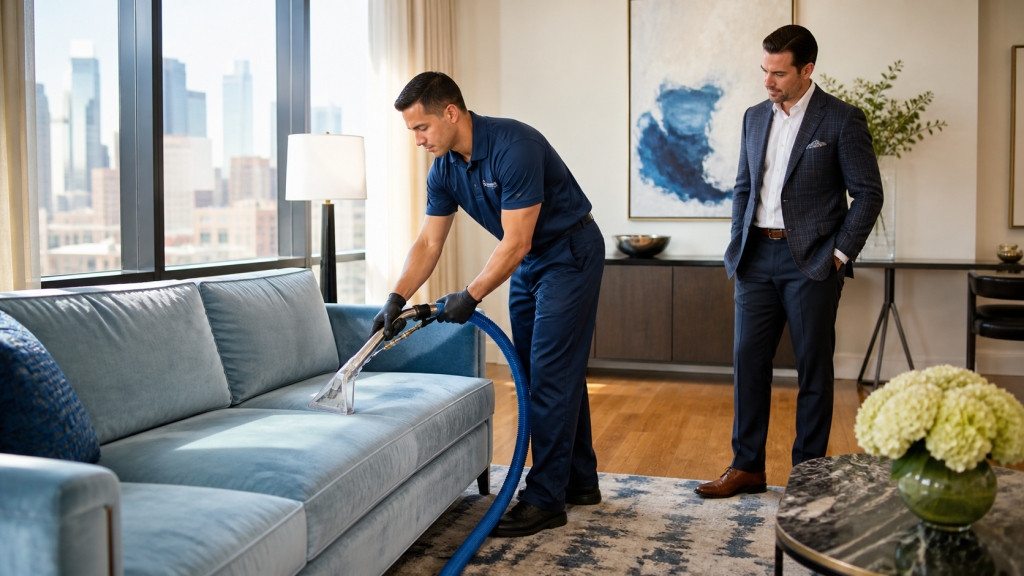
Trained upholstery cleaners use commercial-grade steam cleaning systems that control temperature, pressure, and moisture. That balance is key. Enough heat and power to break up deep soil, but not so much that you damage the fabric, shrink cushions, or bleed colors. This is where professional upholstery cleaning in Manhattan really separates itself from quick fixes.
What Professional Upholstery Cleaning Really Delivers
A proper upholstery cleaning visit is more than just running a machine over a sofa. It starts with a close look at what the piece is made of and how it is used in the co-op.
A typical professional process includes:
- Pre-inspection of fabrics and construction
- Testing for colorfastness and checking for weak seams
- Targeted pretreatments for body oils, food, and drink spots
- Steam cleaning to flush out soil and allergens
- Focused drying methods to help furniture dry quickly
For Manhattan co-ops, there are extra details that matter. Pros who work in these buildings understand doorman setups, elevator bookings, and house rules about contractor access. They plan around quiet hours, lobby traffic, and security steps so there is less disruption for residents and staff.
When upholstery is cleaned correctly, you get:
- Longer life for sofas, sectionals, and chairs
- A fresher, higher-end look in common areas and units
- Less need for early replacement of expensive pieces
For Manhattan co-op boards and unit owners, that means protecting investments and making the building feel cared for, not just in the lobby but in every shared space.
Creating a Seasonal Cleaning Plan for Manhattan Co-Ops
Upholstery does best with a schedule, not a panic cleaning after a big spill. In Manhattan, the way people live through the seasons gives a good guide for timing.
A simple plan could look like this:
- High-traffic common seating: every 3 months
- In-unit sofas and sectionals: once or twice a year
- Dining chairs and upholstered benches: once a year, or more if used daily
- Mattresses and headboards: once a year
Tying upholstery cleaning to natural building rhythms helps. Many Manhattan co-ops like a post-summer refresh after travel and visitors, a pre-holiday tune-up before guests arrive, and a post-winter cleanup after months of closed windows and heavy coat use.
Manhattan co-op boards can also:
- Add upholstery care to house rules or maintenance guides
- Align upholstery visits with carpet and rug cleaning visits
- Share clear expectations with residents for in-unit pieces
Using a trusted Manhattan upholstery cleaning provider on a recurring basis means the team already knows your building’s entry process, staff, and spaces. That saves time and makes each visit smoother for everyone.
How NY Steam Clean Helps Manhattan Co-Ops Upgrade Their Standards
At NY Steam Clean, we work across Manhattan, so we understand how co-op life here affects upholstery. Busy lobbies, pets, deliveries, and constant foot traffic all leave their mark on fabrics.
Our focus is on safe, high-powered steam cleaning and green-friendly solutions that are strong on soil but gentle on upholstery. We bring commercial-grade equipment, trained technicians, and respect for building rules and co-op guidelines. That includes working around doorman schedules, using proper insurance, and keeping common areas neat while we clean.
For Manhattan co-op boards, property managers, and residents, professional upholstery cleaning in Manhattan is one of the simplest ways to improve comfort and appearance at the same time. Clean seating looks better, smells better, and feels better, and it helps protect the value of your furniture and your building for the long term.
Refresh Your Upholstery With Trusted Local Experts
If your furniture is looking tired or stained, our team at NY Steam Clean is ready to help restore it with safe, effective methods. Learn how our professional upholstery cleaning in New York can extend the life of your sofas, chairs, and more while improving your indoor air quality. Have questions or need a custom quote for your home or business? Simply contact us and we will walk you through the next steps.